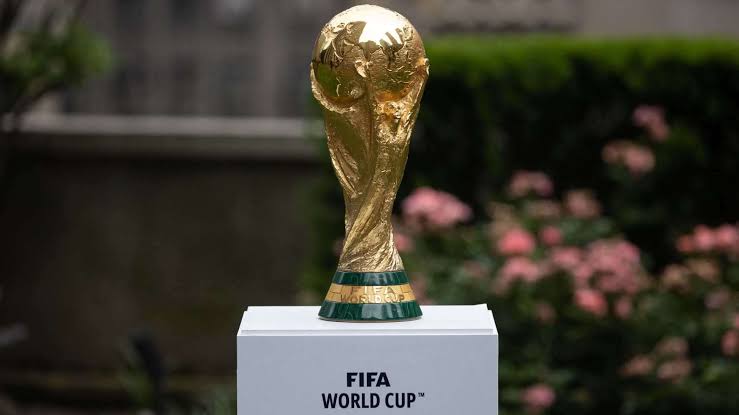
The 2030 World Cup looks set to mark a historic milestone, with football edging closer to hosting its first-ever 64-team tournament. CONMEBOL president Alejandro Domínguez, speaking in New York ahead of a high-profile summit in the United States, hinted at a development he described as “something that will shock the world.” FIFA president Gianni Infantino and the presidents of Argentina, Paraguay, and Uruguay will also attend the meeting, underlining its significance.
Domínguez’s comments point to a growing momentum behind the expansion plans, which could be formally announced as early as next week when the FIFA Council convenes. The Council, where Argentina’s Chiqui Tapia sits as a member, is expected to take the decisive step rather than wait until the FIFA Congress scheduled for next year in Vancouver.
If approved, the 2030 edition would feature 16 groups of four teams each, up from the 12 groups that will debut in the 2026 World Cup. The top two sides from each group would advance, leading to a 32-team knockout phase—the same number of teams that currently reach the knockouts under the existing format. Such a change would not only increase global participation but also extend the tournament’s reach across multiple continents.
South America is already guaranteed a symbolic role in the centenary World Cup. CONMEBOL previously secured the right to stage the opening match in Montevideo, with additional fixtures in Argentina and Paraguay. Now, Domínguez and his executive committee are pushing for even more representation. Argentina, for example, is expected to host a full group stage, with River Plate’s Monumental Stadium already confirmed as the venue for the national team’s opener. Uruguay and Paraguay are also slated to host group matches, the latter in a brand-new stadium under construction.
Read Also: Mourinho Slams VAR: ‘I Don’t Like Today’s Football’
The remaining zones will be hosted by Spain, Portugal, and Morocco, the official World Cup hosts. The expanded structure underscores FIFA’s ambition to make the 2030 tournament a truly global celebration, both in scale and symbolism.
While fans may debate the sporting merits of a 64-team competition, one thing is clear: football is preparing for its most ambitious World Cup yet, promising unprecedented diversity and spectacle.